If you engage in logistics and supply chain management, then you understand that warehouses are important, and they help with logistics and supply chain management, too. The type of warehouse structure you choose depends on the type of goods, the length of time goods will be stored, and environmental considerations. In this blog, we’ll take a look at the different warehouse structures that are used in industries and how businesses can optimize their storage with the right choice.
1. Conventional Warehouse
A conventional warehouse is one of the most common storage structures. These warehouses are typically built with concrete, brick, or steel and are used for long-term storage of products in industries like manufacturing, retail, and wholesale. They provide basic storage and are designed to handle large volumes of goods.
Advantages:
- Suitable for various types of products.
- Typically designed with large open spaces for easy storage and movement.
- Can be customized with additional features like racking systems or temperature control.

2. Automated Warehouse
Automated warehouses are equipped with technology that allows for the storage and retrieval of goods with minimal human intervention. These structures use robotics, conveyors, and automated storage and retrieval systems (AS/RS) to maximize efficiency. Automated warehouses are ideal for large businesses that handle a high volume of products and need to optimize speed and accuracy.
Advantages:
- Increased efficiency and reduced labor costs.
- Enhanced accuracy in tracking and retrieving products.
- Ideal for businesses with complex inventory management needs.
3. Climate-Controlled Warehouse
A climate-controlled warehouse is essential for storing goods that are sensitive to temperature and humidity changes. These warehouses are equipped with systems to regulate internal conditions, making them perfect for industries like food, pharmaceuticals, and electronics.
Advantages:
- Protects sensitive goods from spoilage or damage.
- Ensures consistent quality for temperature-sensitive products.
4. Cold Storage Warehouse
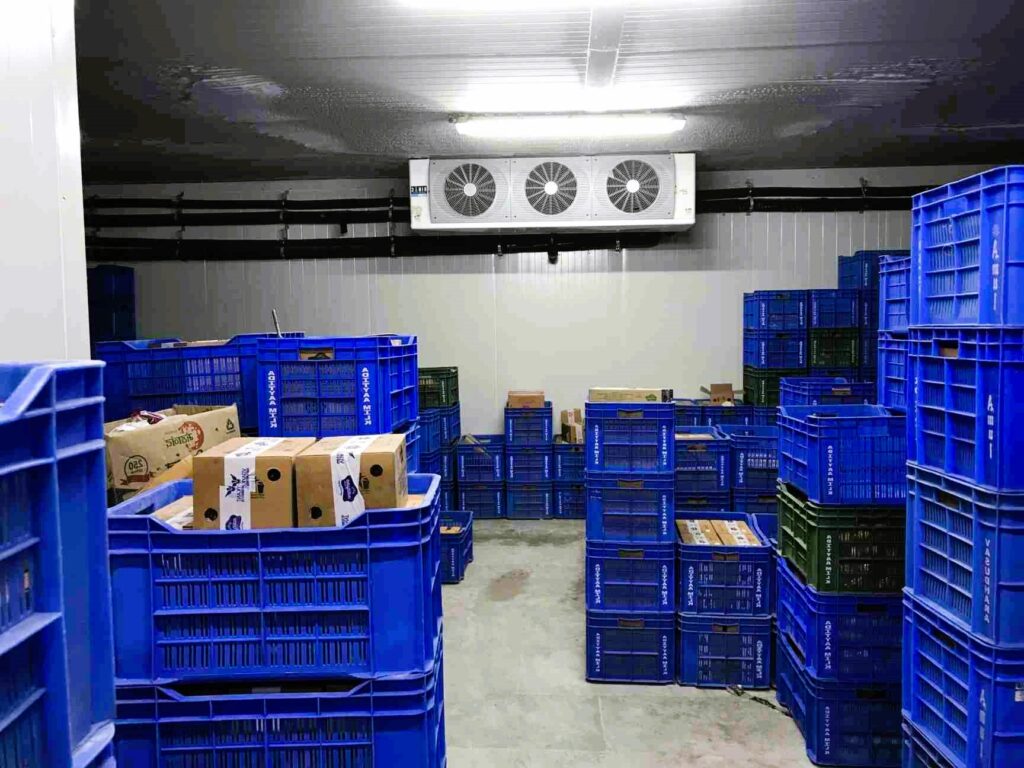
Cold storage warehouses are specialized facilities designed to store perishable items at low temperatures. They are commonly used in industries such as food processing and pharmaceuticals to preserve goods like frozen foods, meat, and vaccines.
Advantages:
- Preserves perishable goods for extended periods.
- Necessary for maintaining the cold chain in industries like healthcare and food distribution.
5. Distribution Center
Distribution centers are designed for the quick movement of goods rather than long-term storage. These facilities receive goods, sort them, and then distribute them to their final destination. Distribution centers are crucial in industries like e-commerce, where rapid order fulfillment is necessary.
Advantages:
- Optimized for quick turnaround.
- Reduces shipping times and costs by being strategically located near key markets.
6. On-Demand Warehouses
On-demand warehouses are a flexible solution for businesses that don’t need permanent storage. These are often provided by third-party logistics (3PL) companies, allowing businesses to rent space as needed. On-demand warehouses are perfect for companies with fluctuating storage requirements, such as seasonal businesses or startups.
Advantages:
- Flexible, short-term storage solutions.
- No long-term commitments, reducing overhead costs.
- Ideal for businesses that experience fluctuating inventory needs.
7. Pre-Engineered Buildings (PEB)
PEB (Pre-Engineered Buildings) have revolutionized warehouse construction by offering a faster, more efficient way to create storage spaces. These structures are pre-designed and manufactured off-site, then assembled on location. PEB warehouses are often made of steel and can be customized to meet specific business needs, making them a popular choice for industries looking for flexible storage solutions.
Learn More About PEB Structures & Sheds
Advantages:
- Quick installation and cost-effective construction.
- Customizable layouts for specific storage needs.
- Durable and long-lasting, ideal for permanent storage solutions.

Other Essential Structures: Monsoon Shed & MS Structure Shed
While not conventional warehouse types, monsoon sheds and MS structure sheds are important storage solutions for industries needing temporary or heavy-duty storage options.
- Monsoon Sheds: These temporary structures are often used to protect goods from heavy rains during the monsoon season. They provide essential cover for short-term storage needs, especially in construction and agriculture, where goods must be kept dry.
- MS Structure Sheds: Made from mild steel, MS structure sheds are durable, robust solutions used for industrial storage. These semi-permanent structures are designed to withstand tough weather conditions and heavy loads, making them ideal for industries that require long-term storage without the high cost of traditional warehouses.
8. Private Warehouse
Private warehouses are owned and operated by a company for its own storage needs. These facilities are often found in large manufacturing or retail businesses that require dedicated storage space. Private warehouses allow companies to have full control over their inventory management and distribution processes.
Advantages:
- Complete control over storage and operations.
- Tailored to specific business needs.
- Can include specialized features like climate control or automation.
9. Public Warehouse
Public warehouses are operated by third-party logistics providers and offer storage space to multiple businesses on a rental basis. This is an affordable solution for small and medium-sized businesses that do not have the capacity to build or maintain their own warehouse facilities.
Advantages:
- Lower cost compared to private warehouses.
- Scalable based on storage needs.
- Often located near transportation hubs for easy distribution.

10. Bonded Warehouse
A bonded warehouse is a facility licensed by the government where imported goods can be stored without paying customs duties until they are sold. These warehouses are ideal for importers who want to defer tax payments until their goods are released to the market.
Advantages:
- Delays customs duty payments, improving cash flow.
- Secure storage for imported goods.
- Commonly located near ports and other entry points.
Choosing the Right Warehouse Structure
Selecting the right warehouse structure depends on several factors:
- Type of Goods: Perishable, heavy, or fragile goods require different storage environments.
- Duration: Whether you need temporary or long-term storage.
- Budget: The cost of building and maintaining different warehouse structures varies widely.
- Location: Warehouses near transport hubs or markets can reduce logistics costs.
While PEB warehouses offer speed and flexibility, monsoon sheds provide short-term protection from harsh weather, and MS structure sheds are perfect for industries needing robust, semi-permanent storage solutions. By carefully considering your business’s storage requirements, you can choose the ideal structure to optimize operations and protect your inventory.
In conclusion, understanding the different types of warehouse structures allows businesses to make informed decisions that align with their specific storage needs. Whether you’re looking for a quick-to-build PEB, a temporary monsoon shed, or a durable MS structure shed, each solution offers unique benefits that can help your business operate more efficiently.